
Verbal Communication
Asking Personal Information
by Lana
お姉さんどこで働いてるの?(Onee-san where do you work at?)
Do you think the scout asked this personal question to simply start a conversation?
The questions that they ask are not random, but precisely calculated to meet their own needs.
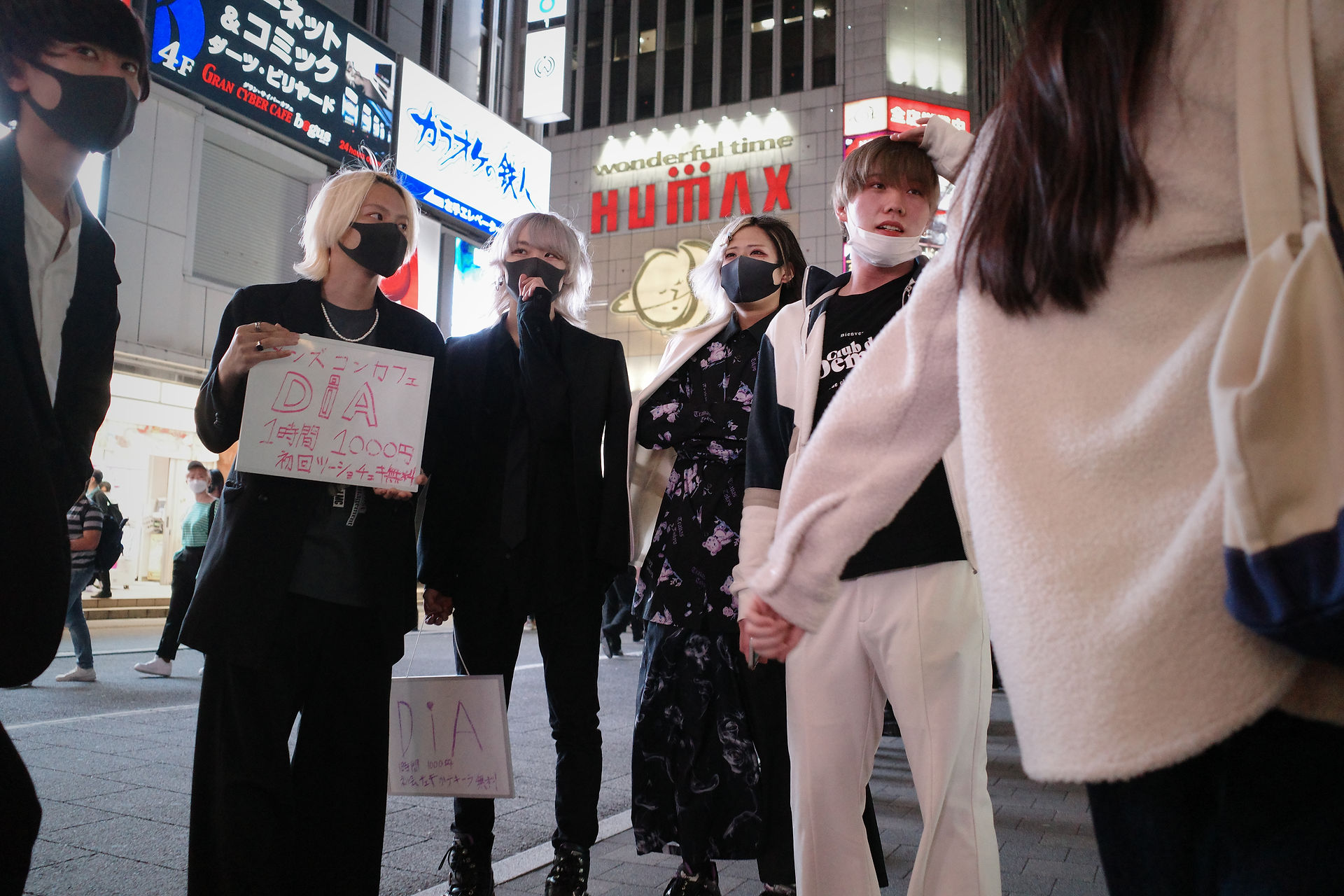
Walking down the streets of Hanamichi-Dori, there are many scouts waiting for female pedestrians to pass by the area. After they scan the targets’ appearance and decide whether if they have passed the “entrance examination” for working industry, they will instantly approach you for recruitment.
In the video, there was a scout who approached and suddenly asked where I was working at in Kabuki-cho without any greetings. I was wearing a Jirai-kei outfit pretedning to be one of the girls.
Assuming from the question, it is possible to conclude that the scout thought I belonged to the Kabuki-cho community, specifically working for the industry. I ignored him by silently passing by him. He disregarded me within a second.

What kind of personal questions do scouts ask?
Types of information that is valued by the scouts
Personal information is the key to the scouting process.
It allows them to determine the target’s worth and value of being useful to them. Because scouts indirectly benefit from these workers, it is important for them to do a very careful and precise 品定め (value judgement.)
Asking personal questions is not simply a persuasion method. It is important to the research because this is the most common and main activity that scouts do.
From starting the analysis from the rather simple types of questions asked by them, it allows the first layer of the mysterious reality of these mediators to be uncovered.
Simmel claims that urbanites interact with each other solely based on their values and advantages (Simmel, 1903). In a sense, scouts are the typical example of this because they only view the targets as a possible source of their income.
1. Age


This is an important question that is frequently asked to determine if the target is suitable for the work they are offering. As a mediator between the future workers and the industry, one of the most crucial role for scouts is to be cautious of the targets’ age to avoid conflicts occurring between the work industry and the law enforcement.
Punishment: a fine up to 1 million and 1 year of imprisonment if one hires an individual under 18 years old.
You will frequently see news regarding work industry hiring underage girls. The news article discusses an arrest happened on July 22nd, 2022. Although it is difficult to expose the crime compared to other crimes, Japanese police force keep a watchful eye out for the work industry.
The industry would rather avoid the punishment that could possibly ruin their business than taking the risk of hiring underage girls.
2. Occupation
This is a type of question that scouts used to determine how they are going to convince the targets afterwards such as how to introduce the work.
For instance, if the target is a current or former worker, scouts will utilize this fact to convince the targets by saying that there is a better store with better environment and money-making opportunity.

Onee-san, do you have a boyfriend?
(お姉さん彼氏いるの?)
5. Plans
This is another type of common question asked by scouts to determine if the targets have time to discuss the job details at the moment. Depending on the answer, the scouts will suggest an alternative method of introducing the job.
For instance, they will offer to arrange a meeting on another day or contact them through communication apps.

3. Personal Relationship
If a target is in a romantic relationship with another, it is less likely for them to consider the work industry because of the possible negative effects on the relationship.
Some work involves activities, therefore scouts value this question to avoid complication and reduce the time spending on targets who are less likely to become workers.
Why is this question important?
It is crucial for scouts because they benefit indirectly from the workers they introduce to the industry. (Check Scout more details. )

Conclusion
Although it seems relatively random for the scouts to ask these questions, there are hidden intensions behind them. Analyzing the types of personal questions, we are able to observe the priorities that scouts value when scouting.
In order to not only successfully scout the girls but to allow the girls to continue working in the working industry, it is extremely crucial for these types of personal information to take into consideration for the scouting process.
Sections
Verbal Communication